
For years, skipping breakfast was presented as a smart nutrition strategy.
- Save calories early in the day.
- Hold off eating as long as possible.
- “Earn” your meals later.
It can feel disciplined and productive — especially if you’re busy in the morning or trying to manage your weight.
But many people notice something happens later in the day. Their brain starts thinking about food… a lot. If you’ve ever skipped breakfast and found yourself feeling overly hungry, distracted by food, or craving quick energy by the afternoon, there’s a very normal reason for that.

Why Skipping Breakfast Can Backfire
When you wake up, your body has already gone several hours without food. Your brain, muscles, and organs are ready for fuel.
If breakfast gets skipped, your body doesn’t just forget that it needs energy. Instead, it waits. And waits. Eventually your brain starts sending stronger signals that it’s time to eat.
These signals can show up as:
- Difficulty concentrating
- Feeling irritable or low-energy
- Thinking about food more often
- Strong cravings for quick sources of energy like carbohydrates or sugar
This is not a lack of discipline. It’s biology. Your brain prefers a steady supply of energy, and when it hasn’t received food in a while, it starts pushing harder to get it.
Why Food Cravings Often Show Up Later in the Day
Many people notice that when they skip breakfast, their appetite doesn’t just gently return later — it can feel intense.
That’s because the body begins looking for fast, efficient energy.
Carbohydrates and sugar are quick sources of fuel for the brain, which is why cravings for things like sweets, snack foods, or larger portions often show up later in the afternoon or evening.
This is one reason people sometimes feel like they “lose control” with food later in the day after skipping meals earlier.
The Connection Between Skipping Breakfast and Food Noise
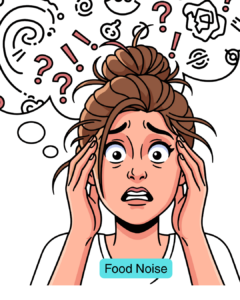
Another thing people often notice when skipping breakfast is something commonly referred to as food noise.
Food noise is that constant background chatter about food in your mind:
- thinking about your next meal
- debating what you should or shouldn’t eat
- feeling distracted by thoughts of food
When your body hasn’t received enough energy, it’s natural for your brain to focus on getting that need met. In other words, thinking about food more often isn’t a sign that you’re obsessed with food. It’s often a sign that your body needs nourishment.

Does Everyone Need Breakfast?
Not necessarily. Some people naturally feel hungry shortly after waking up. Others may prefer to eat a bit later in the morning.
The key isn’t forcing yourself to eat at a specific time.
The key is paying attention to your body’s signals and making sure you’re eating enough throughout the day so that your hunger cues don’t become extreme.
For many people working on healing their relationship with food, eating earlier in the day can help with:
- more stable energy
- improved concentration
- fewer intense cravings later
- less preoccupation with food
The Bottom Line
Skipping breakfast to save calories can seem like a smart strategy.
But for many people, it leads to stronger hunger, louder cravings, and more thoughts about food later in the day.
Sometimes the solution isn’t more control.
It’s simply giving your body the fuel it’s been waiting for.
Need Support with Your Relationship with Food?
If you find yourself stuck in cycles of skipping meals, intense hunger, and feeling out of control with food later in the day, you’re not alone.
In my 1:1 nutrition counseling sessions, we work on:
- rebuilding hunger and fullness awareness
- reducing food noise
- breaking the restrict–binge cycle
- creating balanced, sustainable eating patterns
If you’re ready for food to feel less stressful and more intuitive, you can learn more about working together on my website. If 1-on-1 sessions are not what you’re looking for, I also offer a self-paced nutrition course called Your Guide to Sustainable Nutrition. Check out the details here.
You don’t have to navigate this alone. Contact me!